
Shock wave therapy, explained
5 min read

Breathing in a pressurised chamber sounds futuristic, but the idea is simple. Here’s how hyperbaric therapy works, what the research says, and what a session is really like.
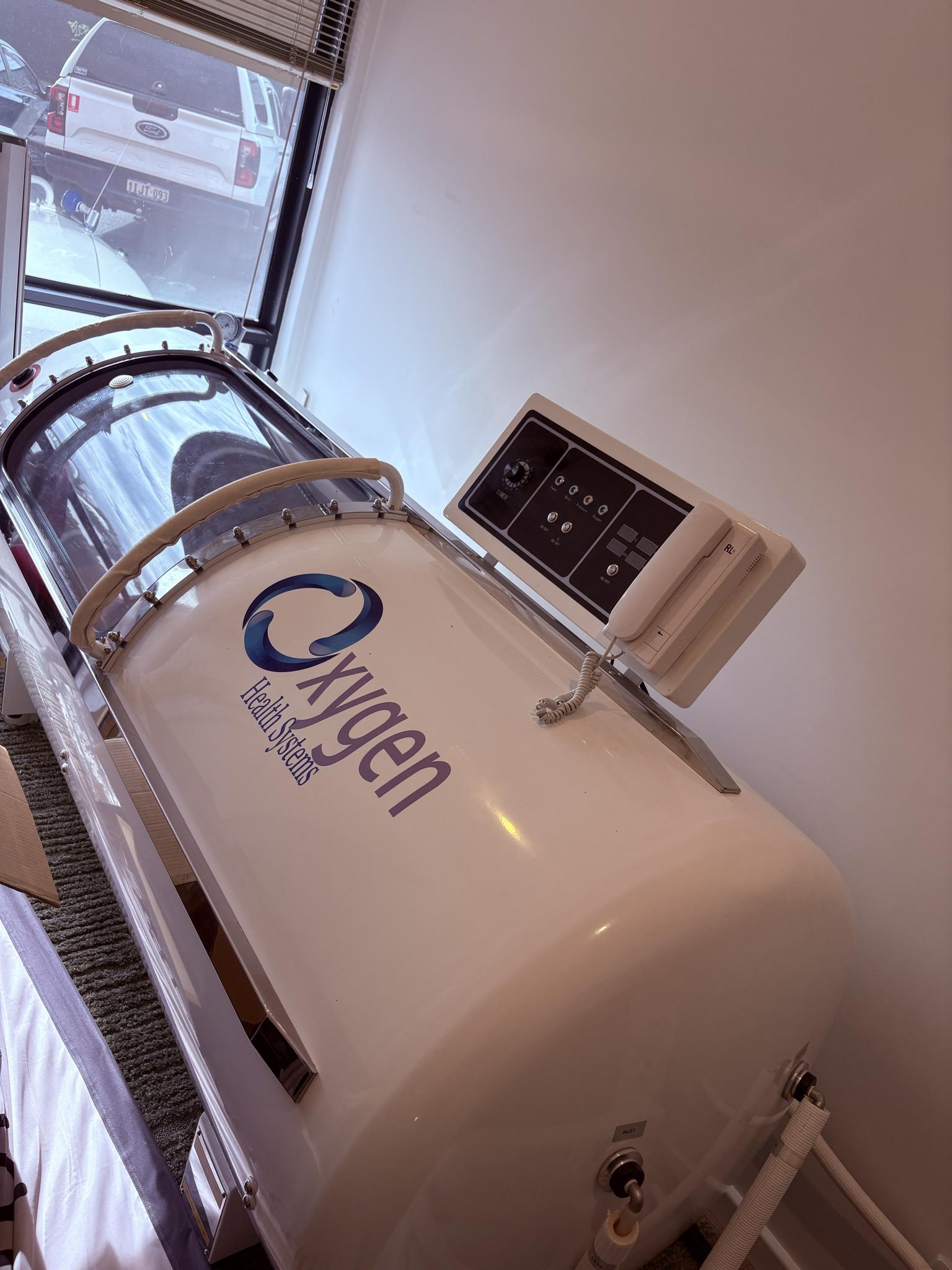
Hyperbaric therapy is one of those treatments people have often heard of but rarely understand. Elite athletes swear by it, wellness clinics talk it up, and hospitals use it for very specific medical conditions. So what is it actually doing, and is it something worth exploring for yourself?
We’re bringing a hyperbaric chamber to Breathe, so it felt like the right time to explain it plainly — the promise, the evidence, and the honest limits.
Inside a hyperbaric chamber, the air pressure is raised above normal atmospheric pressure. Under that extra pressure, more oxygen dissolves into your blood plasma, which means more oxygen can reach your tissues.
Oxygen is fundamental to how the body repairs itself, so the theory is straightforward: give tissues more of it, and you may support the processes involved in recovery.
It’s worth knowing there are two quite different worlds here. Hospital hyperbaric units use high pressures and 100% oxygen to treat a defined list of conditions, such as decompression sickness and certain non-healing wounds.
Wellness chambers, like the one we’ll offer, run at milder pressures. The research on mild hyperbaric therapy is still developing, so we’ll always be upfront about that: it’s best thought of as a complement to hands-on care and healthy habits, not a replacement for medical treatment.
People come to hyperbaric therapy for a range of reasons. The ones we hear most often are:
We see hyperbaric therapy as one more way to support the body’s own recovery — never a shortcut around it.
You lie down in a soft-sided chamber, fully clothed. As the pressure gently rises, your ears may feel full, much like on a plane descending — swallowing or yawning helps. After that, most people simply relax, read, or doze.
Sessions typically run for around an hour. Afterwards you can get straight back to your day.
Hyperbaric therapy isn’t suitable for everyone. Some conditions — including certain lung, ear and sinus issues — mean it should be avoided, so we’ll go through a health check with you first. If you’re under the care of a GP or specialist, it’s a good idea to talk to them too.
We’ll share availability as soon as the chamber is ready. In the meantime, ask us in clinic if you’d like to know more.