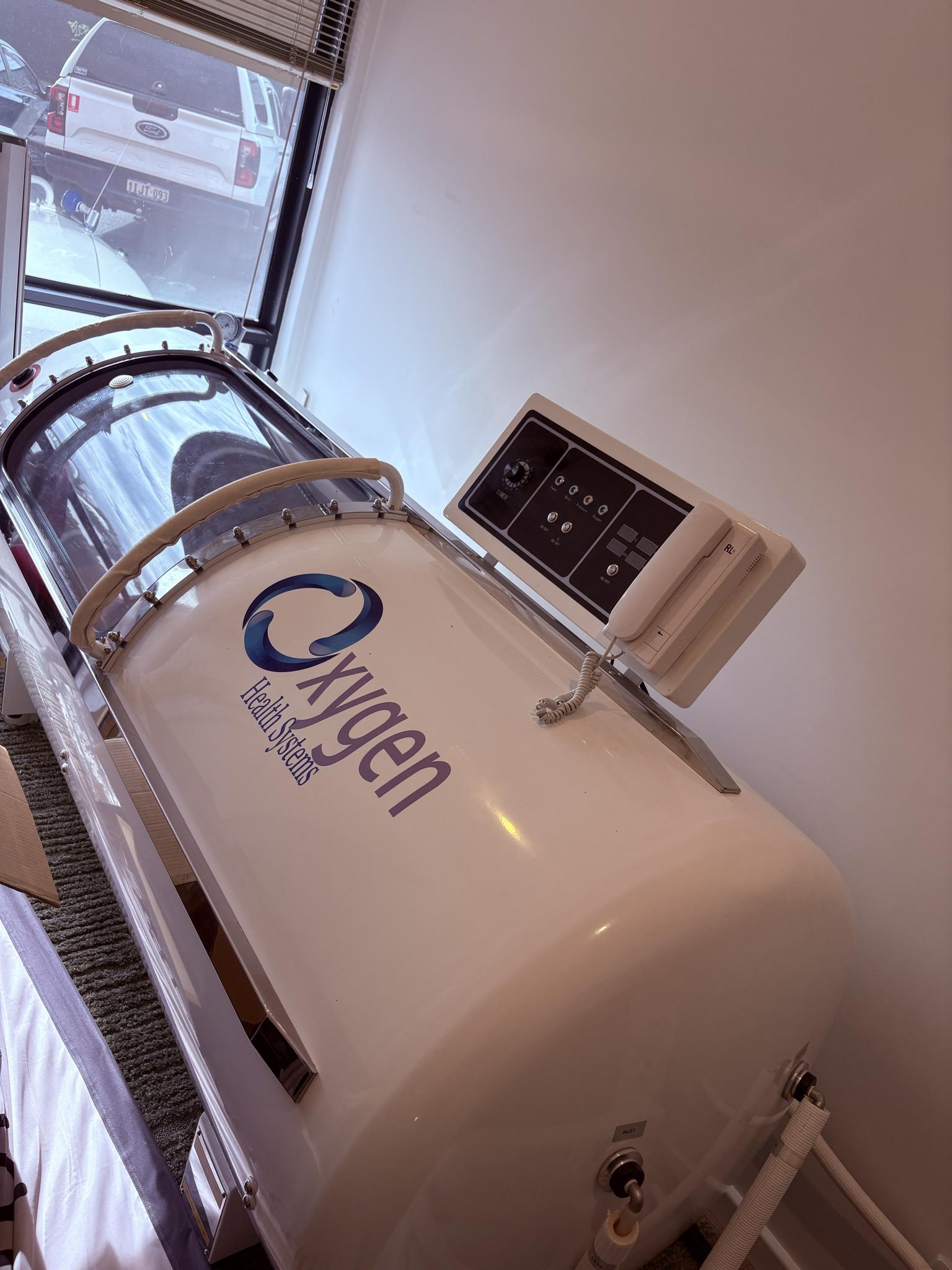
Hyperbaric chamber therapy, and what it may offer
6 min read

Small, sustainable changes matter far more than the occasional big effort. Here’s where to start — and why your spine will thank you.
If you spend most of your day at a desk, in the car or looking down at a screen, your spine is quietly carrying the cost. The good news is that spinal health rarely comes down to one dramatic fix. It’s the small, repeatable habits — the ones you barely notice — that keep you moving well for decades.
Posture isn’t about holding yourself rigidly upright. It’s about variety and support. The best position is almost always your next one, so the goal is to move often rather than to freeze into a “perfect” pose.
Your spine is built for movement — the healthiest posture is simply the one you change often.
Most daily activity pushes us forward and down. Counteracting that with gentle backward and rotational movement keeps the surrounding muscles balanced and the joints well nourished.
Two or three minutes of gentle mobility — cat-cow, standing side bends and slow spinal rotations — does more for long-term comfort than a single intense session once a week.
Recovery happens overnight. A supportive pillow that keeps your neck neutral, and a mattress that isn’t too soft, gives the tissues we work on in clinic the chance to settle and repair between visits.
None of these habits are dramatic on their own. Stacked together and repeated, they’re what keep a spine resilient — and they make the hands-on care we provide far more effective.